Two DTU students—Marie and Freja—share how their roles at Thylander turn theory into practice, revealing how real projects, responsibilities, and collaboration shape a deeper understanding of architectural engineering beyond the classroom.
When theory starts to feel real
For a lot of DTU students, the classroom gives you an understanding of a field before you ever really see how that field works in motion. You learn the concepts, the methods, the standards, and the case studies. But the pace, the coordination, and the small realities of working life tend to stay abstract until you step into them.
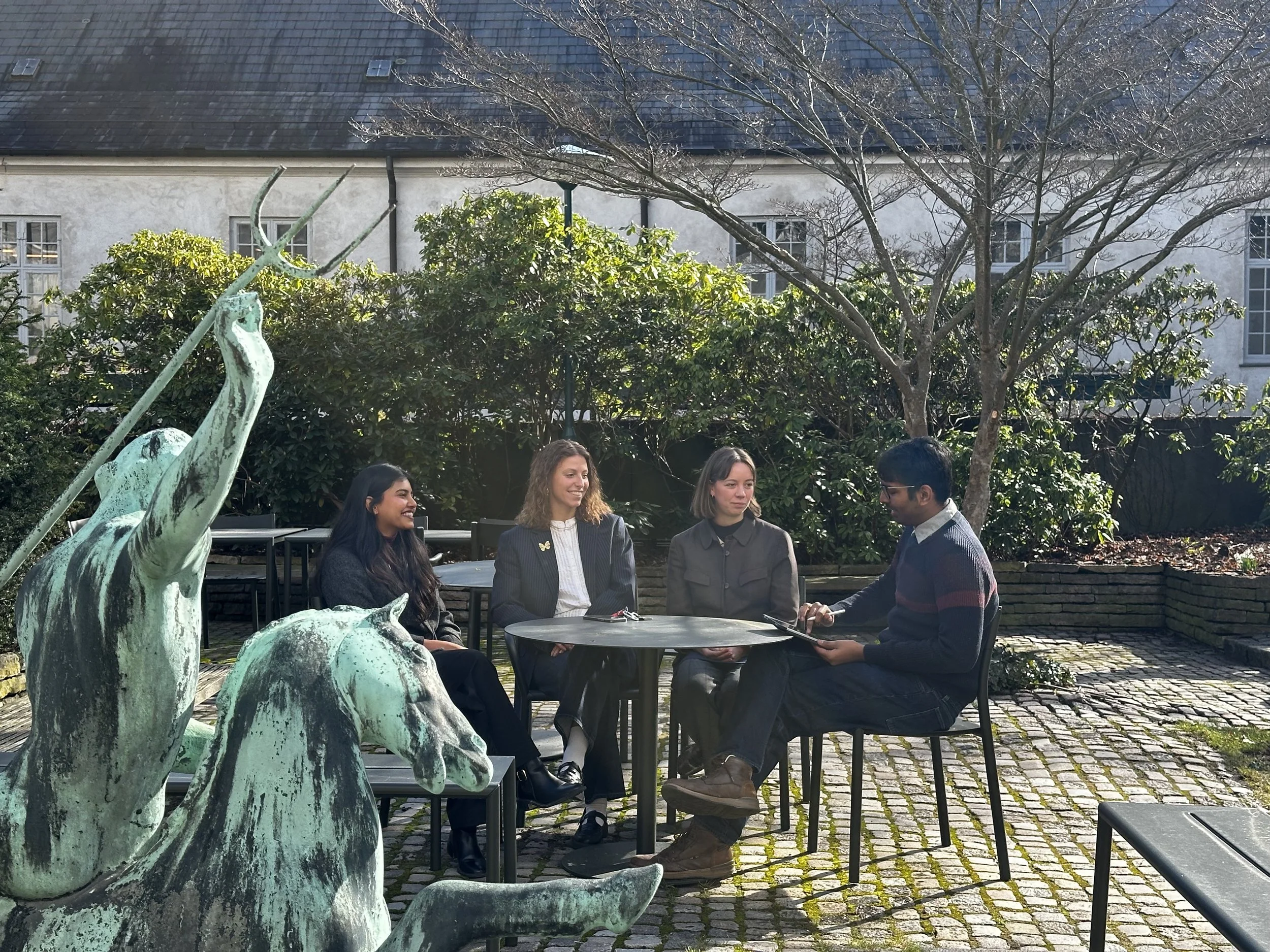
That is part of what comes through so clearly in conversations with Marie and Freja, two DTU students working as student assistants at Sophienberg, owned by Thylander. Both are pursuing master’s degrees at DTU in architectural engineering, and both describe the job as a place where things started to become tangible. What had felt theoretical at DTU began to show up in drawings, discussions, deadlines, site realities, and decisions that mattered.
“I’ve learned all the theoretical principles at DTU, but I’ve never really seen it in real life.” — Freja
What changes when projects are no longer just assignments
What they seem to value most is not one single task, but the shift in perspective. At DTU, they had already worked with materials, sustainability, indoor climate, standards, and project-based cases. But, as they explain, real projects are different. In a university case, a team can arrive at a solution and move on. In practice, one change can ripple through several parts of a project, affect multiple people, and create issues no one saw coming at first. Something as simple as a missing detail in a drawing can suddenly become a real on-site problem. And then there is the part that does not get nearly as much attention in student work: economy. A material may be the ideal choice on paper, but in practice, cost always enters the room.
That is where the job seems to have changed the way they see their studies. Freja talks about arriving with a broad understanding of buildings and being able to recognize the terminology, the logic, and the technical discussions happening around her. Marie describes the same feeling when building codes and standards came up at work: suddenly, they were not just things to memorize for a course, but requirements people actively worked with and had to uphold. The result is not that university and work are opposites, but that one sharpens the other. Theory becomes easier to trust once you have seen where it lands.
“You get a deeper understanding of what it takes to actually uphold the standards and the requirements.” — Marie
More than one task, more than one perspective
A big part of their day-to-day work revolves around Dalux, which they describe as the shared platform where project information lives. Drawings, contracts, updates, documentation, and communication between architects, contractors, and other stakeholders all pass through it. Marie and Freja help keep that structure in place, make sure access is handled correctly, review drawings, and follow up on whether work on site is living up to the agreed standards. It is detailed work, but it also gives them a close view of how many moving parts sit behind what can, from the outside, look like a single building project.
“We are the project leaders’ right hand.” — Freja
At the same time, their role is clearly not limited to one platform. One of the nicest phrases from the interview is when they describe themselves as the project leaders’ “right hand.” The tasks shift depending on where a project is in its life cycle. Sometimes that means keeping structure around documentation and communication. Sometimes it means helping with practical follow-up. Sometimes it means taking responsibility for contact with real estate agents on a project nearing completion. Alongside that, they are also involved in the innovation committee, where they look into materials and ideas that can push projects in a more sustainable direction without losing sight of cost and quality. It is the kind of role where you do not stay in one box for very long.
Growing into responsibility
That variety seems to be part of what makes the experience valuable. Instead of being brought in for one narrow student task, they are exposed to different phases of the building process and asked to learn along the way. They talk about having to investigate things they did not already know, step into new issues as they appear, and adjust depending on what the project needs in that moment. There is something very real about that kind of learning. It is less about mastering one tool and more about becoming comfortable with responsibility, context, and uncertainty.
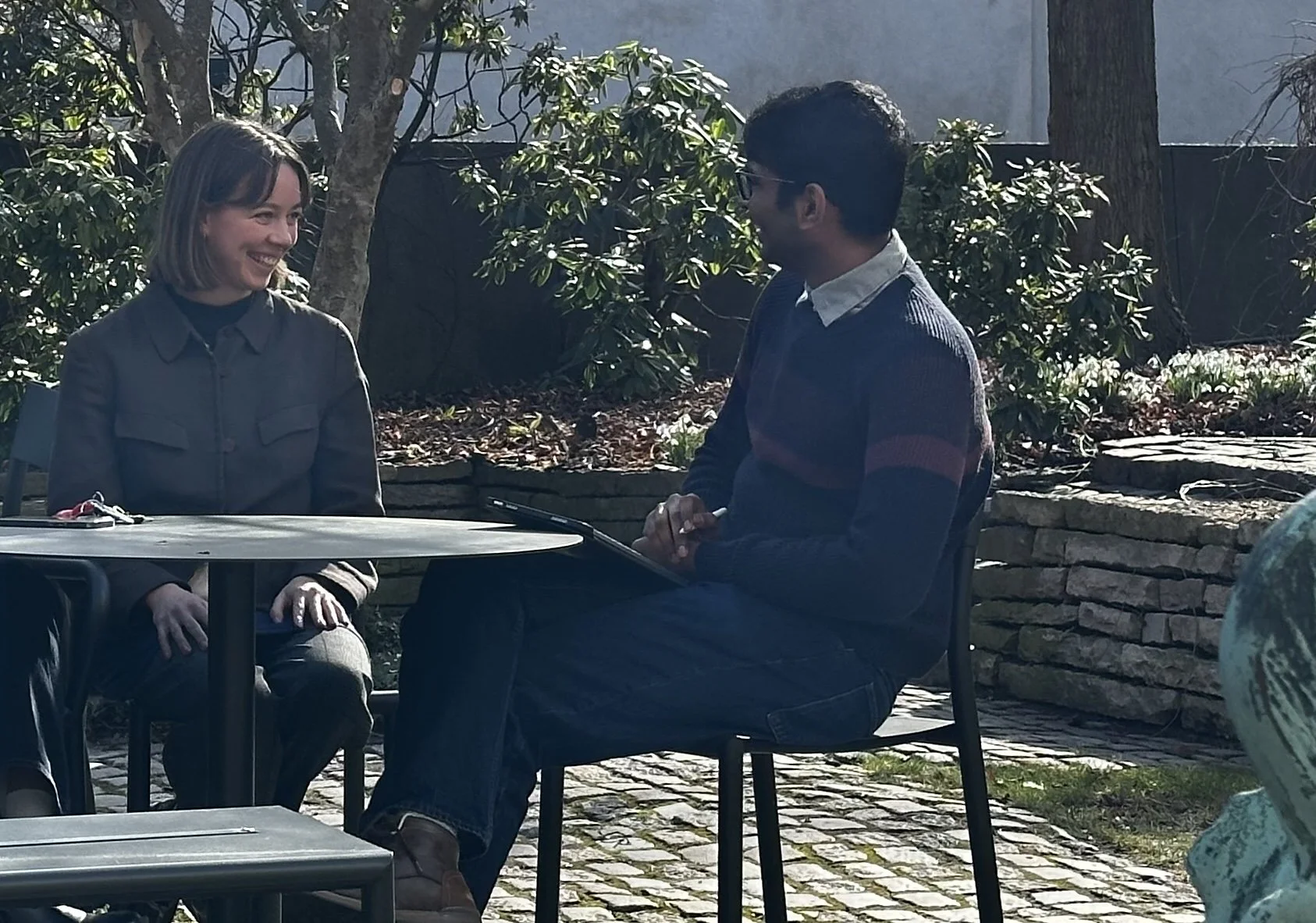
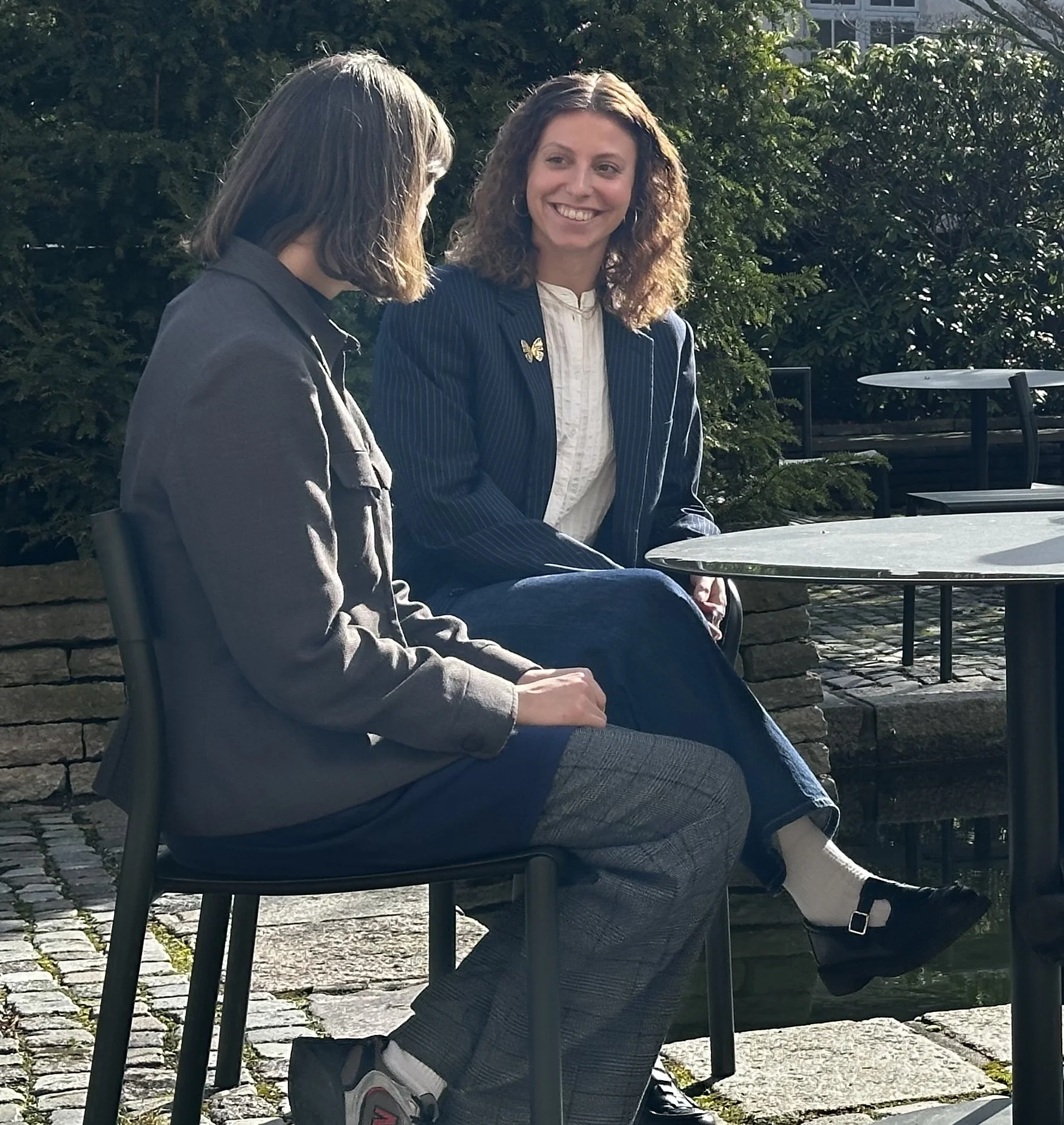
Another thing that comes through strongly is trust. Marie says the role has strengthened her confidence, especially because her ideas are met with openness and taken seriously. Freja puts it in a slightly different way: you feel seen. That part matters, especially because the conversation also touched on entering a field that can appear male-dominated from the outside. Marie is candid about that first impression, but equally clear that the experience itself felt much more welcoming than she had expected. The point is not made dramatically, which is probably why it lands. It comes across as something simple and important: being taken seriously early on changes how you grow.
The people and culture around the work
Just as important as the work itself is the atmosphere around it. Their description of the office is not flashy, but it is vivid in the right ways. There is breakfast in the morning, quick chats before settling in, Monday department meetings where everyone shares what they are working on, and a general ease in asking questions across desks. They prefer being in an open-office setup, and one reason is obvious from the way they talk about it: a lot of the learning happens through proximity. You hear what others are dealing with, ask for help when you need it, and slowly start to understand more of the whole picture.
For students, the flexibility also seems to matter a great deal. They describe the role as highly understanding of university life, especially around exams and heavier periods. Their closest manager knows the DTU system, and they talk very openly about being able to say when a demanding period is coming up and adjust their work accordingly. That kind of flexibility can sound like a small practical detail, but it often determines whether a student role feels sustainable or not. Here, it sounds like part of the culture rather than an exception.
An experience that teaches more than expected
What makes their reflections interesting is that they never make the job sound perfect in a glossy way. Instead, they make it sound useful. They talk about communication becoming more complex than expected. They talk about decisions colliding with other decisions. They talk about standards being harder to uphold in real life than they seem in theory. They talk about seeing how much depends on people speaking to one another clearly. That honesty is what makes the experience feel credible. It is not a story about a student job magically solving everything. It is a story about stepping into work that is dynamic, collaborative, multi-layered, and therefore genuinely educational.
And maybe that is the real thread running through both of their experiences: the job has given them a way to connect study and practice before graduation, not by simplifying the field, but by letting them see it as it is. Not as a neat assignment with clean edges, but as something shaped by standards, people, constraints, judgment, and constant adjustment.
For students standing somewhere between university and working life, that kind of experience can do more than strengthen a CV. It can make a profession feel real.